- Plain Sight Productions
- Posts
- Islam-a-Drama
Islam-a-Drama
no getting around this dilemma

Mr. PSP
January 09, 2026

Ladies and gentlemen, we got him.

land of the free, home of the nike tech
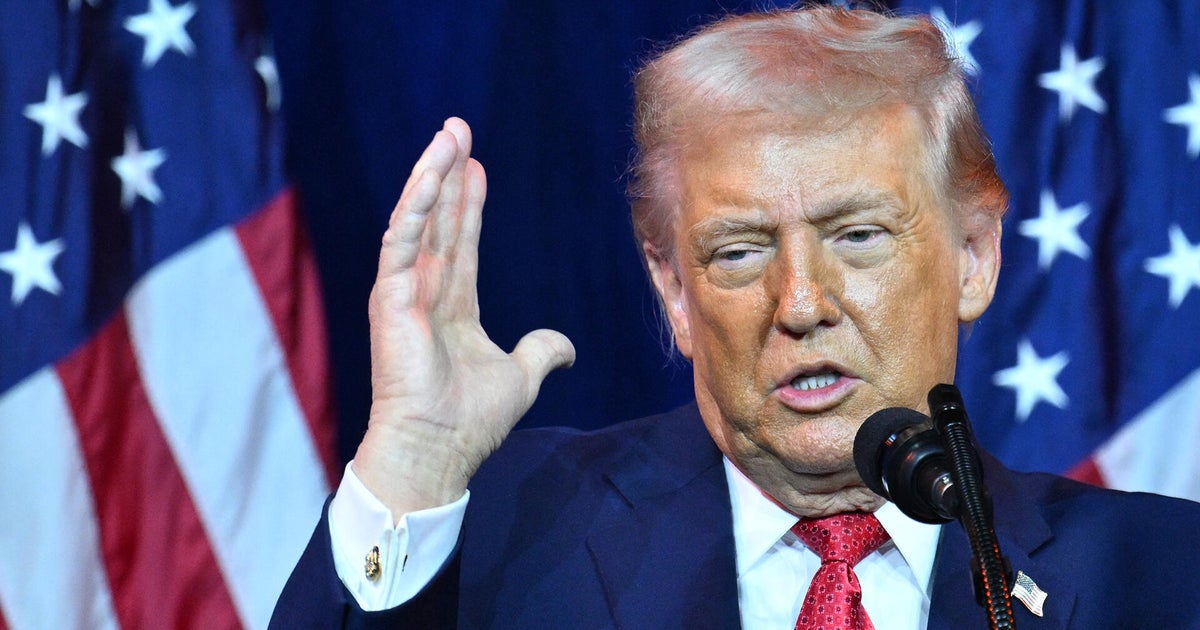
To those unfamiliar with the tension with Venezuela, it’s fair to say that although there is legitimate evidence for Maduro’s role in the alleged drug trafficking scheme, it is not the primary reason why the raid occurred. Rather, this serves as more of an excuse to take him out.
Simply put, this is an opportunity for regime change, specifically to replace Maduro with a pro-West, pro-American, and pro-capitalist leader that will bring an important South American country closer to the ideology of their Western Hemisphere leader.
With such a high profile figure being captured by the American government, controversy is inevitable. Some are elated to see the man allegedly facilitating drug trafficking in our country captured while others label it as just another episode of American imperialism.
Or, more broadly, Western imperialism.
Typically speaking, there is a high correlation between political liberalism and the view of the West being an evil, imperialistic, and oppressive empire.
Barack Obama infamously critiqued the Crusades as an example of people committing “terrible deeds in the name of Christ.” Despite his lack of knowledge about the real history and intention of the Crusades, the statement highlights a common perception that the current meddling in Middle Eastern affairs is nothing but a continuation of the spirit behind the Crusades. When it comes to our activity in the Islamic Middle East, there is a country serving as an obvious confounding variable that may or may not sound like “is real.”
But that’s a whole different conversation.
The relationship between Christianity and Islam is a complicated one to say the least. While we can appreciate the respect the religion has for Old Testament figures like Abraham, Moses, and others, in addition to reverence for Jesus Christ and Mary the Blessed Virgin, the two religions are fundamentally different for many reasons.
Despite the differences being ubiquitous, I will solely focus on two during this article: the nature of God and the scriptural dilemma.
To critique Islam’s view of God’s nature, we must first know our own.
Every Christian understands the idea of God existing outside of time, space, and matter and being all-powerful, all-knowing, immutable, and the creator of all things. For that matter, Islam and Judaism echo the same sentiment.
What is less known is that God is simple.
This means that God is not composite, or made up of parts. Saint Thomas Aquinas explains that “any composite being must contain two factors that are related to each other as potency to act,” but this is impossible because “all combination of potency and act is impossible, because whatever is in potency, is by that very fact, movable.” In other words, God cannot contain parts because this necessitates a composer to put these parts together, which would be impossible if God is the highest being.
Because act is existence and potency is the potentiality of existence, God is “pure act,” meaning He is existence Himself and has no potency because there is no potentiality for existence given He is, again, existence Himself. Hence, this is why Aquinas states that potency is, by its nature, movable, as there needs to be some change that moves potency to act.
Because God does not have parts, this means that His attributes are identical to His essence. For instance, technically speaking, God is not merciful, just, nor wise, but rather, is mercy, justice, and wisdom itself. God’s attributes cannot be distinct from His essence because this would, again, imply God being a composite being made of parts.
“Whoever does not love does not know God, for God is love.”
As we know due to Divine Revelation, this simple God is simultaneously one and three: one in essence yet three in persons. Throughout the history of the Church, theologians have stressed that the fullness of this truth is beyond our comprehension and we will only fully grasp its beauty once we receive the beatific vision. Also, we must hold to the Trinity by faith because it is an idea that cannot be deduced simply from reason alone. However, the Trinity is more than something we must hold to simply because the Bible arbitrarily says so.
The Trinity actually makes sense, despite Muslims and other non-Christians insisting it doesn’t.
In Catholic theology, specifically Thomism, the Trinity is explained as the following: God the Father is the source of the other Trinitarian persons and has always known and loved Himself because He has both a will and an intellect. He is not the source in the sense that He existed before the Son and the Holy Spirit, but rather He is the source as it deals with relations between the three persons. We know that the Son is eternally begotten of the Father, but more specifically, the Son is the perfect Word / intellect / image of the Father. God knows Himself perfectly and there has never been a time in which He did not know Himself, so this knowing of Himself generates a perfect image of Himself that is distinct from Him yet perfectly captures and is identical to His essence.
“Therefore, when an intellect understands something other than itself, the thing understood is, so to speak, the father of the word conceived in the intellect, and the intellect itself resembles rather a mother, whose function is such that conception takes place in her. But when the intellect understands itself, the word conceived is related to the understanding person as offspring to father. Consequently, since we are using the term word in the latter sense (that is, according as God understands Himself), the word itself must be related to God, from whom the word proceeds, as Son to Father.”
In humans, to be and to exist are fundamentally different, but because of God’s simplicity and lack of potency, to be and to exist are identical, meaning the Father and His Word are identical in essence and existence, thus all the attributes predicated to the Father are also predicated to the Word.
The concept of the Son’s eternal nature and His identity as the perfect Word of God is explicitly revealed to us in the Gospel of John:
“In the beginning was the Word, and the Word was with God, and the Word was God. He was in the beginning with God. All things came to be through Him, and without Him nothing came to be.
In the same way that God has eternally known Himself, He has also eternally loved Himself.
“Therefore, as within the Godhead the way whereby God is in God as the known in the knower, is expressed by what we call Son, who is the Word of God, so the way by which God is in God as the beloved is in the lover is brought out by acknowledging in God a Spirit, who is the love of God…rightly then, the Spirit, who represents to us the love whereby God loves Himself, is called The Holy Spirit.”
“Therefore since the word in God who knows and loves Himself is the Son and since to whom the Word belongs is the Father of the word, as is clear from our exposition, the necessary consequence is that the Holy Spirit who pertains to the love whereby God is in Himself as beloved as in lover, proceeds from the Father and the Son.”
This self-contained and eternal love of God thus generates a third person in the Trinity known as the Holy Spirit. The Spirit eternally proceeds from the Father and the Son (or from the Father and through the Son) while the Son is begotten of only the Father because the intellect precedes the will by nature.
For after all, how can any being love what it doesn’t know?
I must emphasize again that the Holy Spirit does not come into existence after the Father or the Son, but rather His eternal proceeding from both persons describes the specific relationship between the three persons.
As I’ve mentioned before, in humans, to be, to know, and to love are distinct, but because of God’s simplicity, all three are identical and subsistent, thus giving us the Trinity.


beauty in the mystery.
Now, for my advanced students out there, you might be thinking: why does the Trinity simply stop at three?
For if God’s Word and Love can be distinct persons, why can’t His mercy, for instance, be a person as well? For after all, His mercy must be identical to His essence.
The succinct answer is that God’s intellect and will are contained within Himself. Based on classical philosophy built mainly by the three As (Aristotle, Augustine, and Aquinas), the intellect is the power by which a being knows the truth, while the will is the power by which a being loves or chooses the good known by the intellect. Thus, the will naturally proceeds the intellect and any sort of love presupposes knowledge. Although the intellect precedes the will, in isolation, it is incomplete because the intellect naturally tends towards love, thus creating an interdependent duo. Most importantly, both the intellect and the will are self-contained within a being. Thus, the persons within the Trinity are not simply any procession but processions that begin and end with God Himself. So using the mercy analogy, God’s mercy falls outside of the unique roles that the intellect and the will play as well as the fact that God is not the recipient of His mercy but rather His creation is.
“If the relation had something external as its term, this would not possess the divine nature, as so could not be a divine person or hypostasis. But procession in God that does not terminate outside of God, must be either according to the operation of the intellect, whereby the Word proceeds, or according to the operation of the will, whereby love proceeds, as is clear from our exposition. Therefore, no divine person can proceed unless He proceeds as the Word, whom we call the son, or as love, whom we call the Holy Spirit.”
Furthermore, not only can there not be any person in the Trinity outside of the Father’s Word or Love, but there can neither be multiple Words nor multiple Loves. We know this with certainty because divine scripture reveals this to us, but also because God knows Himself with a single act of intuition and loves Himself with a single act of love that lasts for an eternity.
Now that we have Aquinas’s Trinitarian lesson out of the way, let’s dive into Islam.
Muslims hold to a strict monotheism through their worship of Allah that includes no parts, composition, or internal distinctions through their teaching of tawhid. From the Muslim point of view, this simplistic nature of God relative to Christianity’s “complex” Trinitarian understanding of the Almighty’s nature leads to an easier understanding, thus making it more likely to be true. I’m not specifically saying this statement is proclaimed by every Muslim, but it seems to be a popular pitch, specifically among public apologists.
But Allah’s simplicity is not as simple as advertised.
Things become a bit trickier when posing a simple question: are Allah’s attributes really distinct from his essence?
Nearly all Muslims would answer yes, which poses a problem: despite holding to divine simplicity, they affirm that there exists something that is uncreated and eternal yet truly distinct from Allah’s essence, thus breaking down this so-called strict monotheism.
Using a simple logical train, if something is distinct from God, then it must be outside God. If it’s outside God, then it is not God, as God alone is uncreated. Thus, anything that is distinct from God must be created and not eternal.
The most pertinent example of this is Allah’s eternal speech, known as the Quran. Obviously, Muslims believe that the physical materials that compose the Quran are created but the underlying essence of what was physically written down is Allah’s uncreated speech. Like the rest of Allah’s attributes, the Quran is affirmed as being uncreated yet distinct from his essence, contradicting the idea that Allah is allegedly without parts. Because this relation is distinct and not identical with the divine essence, it constitutes a real distinction, which is impossible within God unless through hypostases, in which the hypostases would be divine as well. However, Islam strictly denies the existence of hypostatic relations.
This brings up an interesting fact: rather than comparing the Quran to the Bible, a more accurate comparison would be to compare it to the second person of the Trinity, Jesus Christ.
It goes without saying that Christ is infinitely more valuable than the Quran, as the comparison is not an equivocation of truth, worth, or validity, but rather highlighting the idea that what Muslims believe the Quran is maps much closer to what us Christians believe Christ is. In the same way that Christians affirm Jesus Christ is the eternal and uncreated Word of the Father yet distinct from Him, Muslims believe that the Quran is the uncreated word of Allah that is also distinct from him. The only difference is the identity of Jesus Christ as being eternal yet distinct from the Father is logically and philosophically coherent through the existence of hypostatic relations.
Another common Christian W.
Diving into the scriptural dilemma (also known as the Islamic dilemma), Muslims affirm that it was indeed Allah that revealed previous scriptures, specifically the Old and New Testament, meaning that in some strange way, the Bible is indeed true according to Muslims.
“He has sent down upon you, [O Muhammad], the Book in truth, confirming what was before it. And He revealed the Torah and the Gospel.”
So how does that work exactly? How can the Bible be true and from God (from the Muslim perspective) if it contradicts the Quran?
Because of this, many Christian apologists say something along the lines of “The Quran says the Bible is true, and since the Bible is true, the Quran is false.” More specifically, we as Christians know that the Quran cannot be true because all public revelation has been revealed, as the Son—being the perfect image of the Father like we mentioned—reveals everything that needs to be made known to us.
“In times past, God spoke in partial and various ways to our ancestors through the prophets; in these last days, he spoke to us through a Son, whom He made heir of all things and through whom He created the universe, who is the refulgence of His glory, the very imprint of His being, and who sustains all things by His mighty word. When he had accomplished purification from sins, He took His seat at the right hand of the Majesty on high, as far superior to the angels as the name he has inherited is more excellent than theirs.”
Because of this, any time a so-called prophet, whether it be Mohammed, Joseph Smith, or anyone else, proclaims that they have received a new revelation to be added on to or replace the Bible, we automatically know they can be labeled as a false prophet.
Being stuck in a sort of bind, Muslims will reconcile this by claiming that the previous scriptures have been corrupted, thus leading to the discrepancies we see between the two texts. Accordingly, we Christians believe things like the Trinity, Incarnation, Crucifixion, and Resurrection not because it is revealed to us by God but rather because between the time of Christ and the Council of Nicaea, the “real word of God” was either intentionally or unintentionally perverted.
Most Muslims today believe that these “bad actors” actually inserted words and passages to the Bible to ensure it fit “their narrative,” as well as allegedly removing any references of Muhammad.
Interestingly, several early Muslims scholars believed that the Bible was not altered in any way, but rather Christians merely misinterpreted the Bible to arrive at conclusions like Jesus Christ being consubstantial with the Father.
To claim that the Bible has been corrupted is one thing, but to provide no evidence or specificity with regards to these claims is another.
What are the precise details surrounding said corruption? Which specific passages were altered and which ones weren’t? When exactly did these alterations occur?
The answers to these questions are vague to say the least. Rather, it is more of a deductive reasoning exercise that looks something like this: since the Quran is true and the contemporary Bible now contradicts it although the Quran implies there was a time this wasn’t the case, this must mean it was corrupted at some point in time before the Council of Nicaea. The Nicene Council is the reference here because this is the Church’s first ecumenical council and where the Trinity is detailed and dogmatically defined.
Apparently, the consensus among the pre-Nicene Church Fathers regarding Christ’s divinity and the Trinity seems to be an irrelevant data point to Muslims.
“There is one Physician, both fleshly and spiritual, born and unborn, God in man, true life in death, both from Mary and from God, Jesus Christ our Lord.”
“The Father of all has a Son, who also being the Word, is God.”
“The Church…believes in one God, the Father Almighty…and in one Christ Jesus, the Son of God, who became incarnate for our salvation; and in the Holy Spirit.”
“All are of one, by unity of substance; while the mystery of the economy is still guarded, which distributes the Unity into a Trinity.”
“He [Jesus Christ] alone is both God and man, and the source of all our good things.”
Among numerous factors that strengthen the validity of the Catholic faith, the writings of ancient theologians, bishops, and philosophers preaching a faith that is eerily similar to Catholicism is one of the strongest ones.
All praise and glory be to God the Father through Jesus Christ in unity with the Holy Spirit for our perfect, immutable, and transcendent faith.
If you enjoyed this article, feel free to share with your family, co-workers, and friends and tell them to subscribe.
Thanks for reading and until next time.

Reply